DevEd 2025: sparking ideas and shaping futures
ACER news 2 Dec 2025 6 minute readWith bold keynotes and inspiring calls to action, DevEd 2025 generated new ideas and momentum for change across the Asia-Pacific.
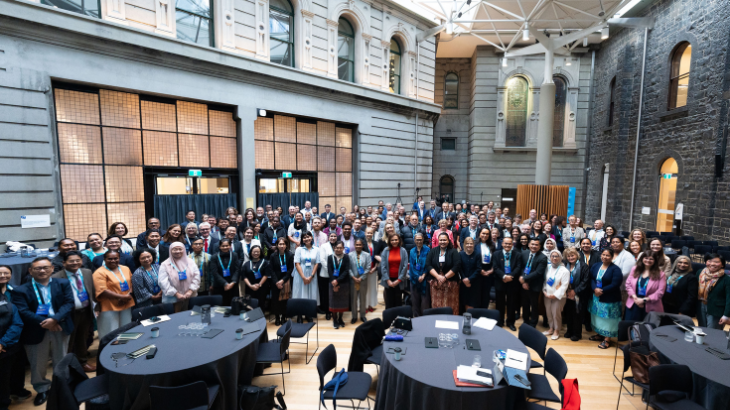
Over 3 inspiring days at the historic State Library Victoria, participants from 30 countries shared research and built partnerships at the inaugural Development and Education (DevEd) Conference. More than 100 speakers contributed to 26 sessions focused on three core priorities: strengthening foundational learning, advancing equity and inclusion, and transforming education systems.
Setting the vision
DevEd 2025 was opened by ACER CEO Lisa Rodgers, who underscored education’s power to expand opportunity and transform lives.
‘There are no silver bullets in life, but if there were one, it would be education,’ she said. ‘Education gives freedom and choice, and unlike anything else, it provides assets – wealth, health and wellbeing – that can never be taken away.’
Lisa invited participants to think boldly about systems transformation and inclusive policies that break down barriers for marginalised learners. She reminded us that lifelong learning starts with strong foundations: literacy, numeracy and social-emotional skills.
‘Each conversation, each connection and each idea shared is a step towards a future where every child, in every corner of our region, has the opportunity to thrive.’
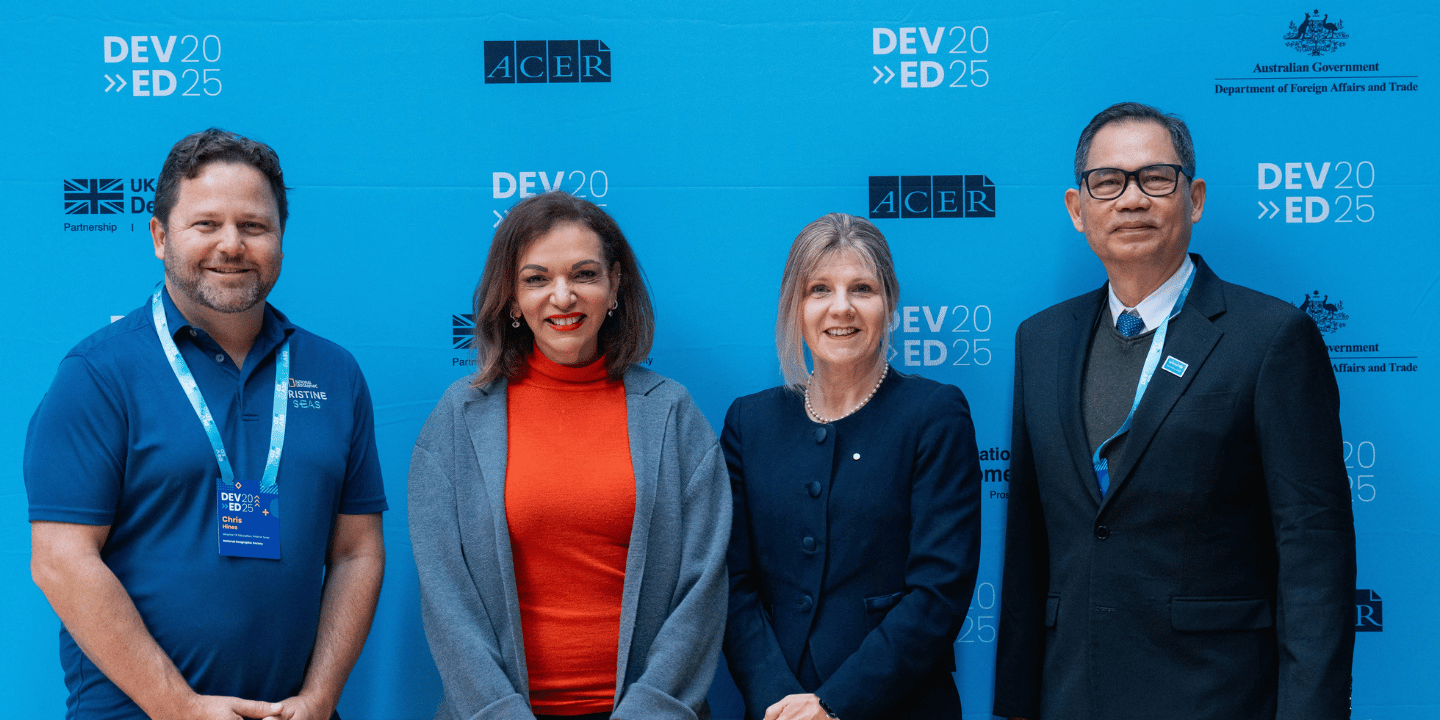
Lisa welcomed the Hon. Dr Anne Aly, Australian Minister for International Development, who delivered a deeply personal keynote weaving her family’s story with the region’s education realities. Reflecting on her grandfather’s determination to educate his daughters in Egypt and her own journey as a migrant and single mother, she highlighted education’s life-changing impact.
‘Education is the one thing that nobody can ever take from you,’ said Minister Aly. ‘Education isn’t just about opportunity; it is actually about a basic human right.’
Minister Aly highlighted Australia’s commitment to stepping up development assistance. Over this financial year, Australia will invest nearly AUD $600 million to help deliver lifelong high quality learning opportunities, particularly for women, girls and people with disabilities.
A particular highlight on day 1 was a cultural workshop blending Lao traditions with First Nations Australian perspectives to explore student belonging, using a string-based activity inspired by the Lao Baci ceremony.
Innovation and inclusion in focus
Day 2 brought fresh perspectives on sustainability and inclusion, starting with an engaging keynote by Chris Hines from National Geographic’s Pristine Seas. Chris showcased innovative curriculum co-creation in Palau, youth-led research in Tuvalu, and education expeditions in the Solomon Islands – all aimed at driving climate-responsive education across the Pacific.
An important high-level panel on data-driven education reform was followed by the announcement of ACER’s new partnership with the UNESCO International Institute of Educational Planning. The collaboration will strengthen educational planning and management across the Asia–Pacific through joint work on data use, capacity building and knowledge exchange.
Foundational learning at a crossroads
Day 3 focused on the urgent need to accelerate progress on foundational learning. UNICEF’s Myo-Zin Nyunt highlighted persistent underinvestment across the region, noting that only 1 in 3 countries allocates at least 15% of public expenditure to education – and only 39% of this is spent on primary education.
‘Imagine if we simply shifted one percentage point of resources toward the poorest children,’ he said. ‘That alone could pull 35 million out of learning poverty. To the governments across the region: this is the moment.’
A standout symposium examined Indigenous and minority language education in Fiji and Vanuatu, highlighting the consequences of excluding Pacific languages from classrooms. Drawing on Pacific storytelling traditions such as Talanoa, speakers called for inclusive language policies, strengthened teacher training and reflective practices rooted in community leadership.
Jeaniene Spink, ACER’s Research Director for Education and Development, provided the closing DevEd 2025 statement. In her remarks, Jeaniene emphasised the need to share knowledge, act on evidence of what works, and invest decisively in foundational learning – the platform on which all future learning and economic productivity depends.
Forging connections for the future
DevEd 2025 emerged from a shared commitment by the Australian Council for Educational Research, the Australian Department of Foreign Affairs and Trade, and the UK’s Foreign, Commonwealth & Development Office to bring evidence, experience and partnership together to strengthen education across the Asia-Pacific region.
ACER’s work was woven throughout the program — from early learning and assessment innovation to gender equity, culturally responsive storytelling and support for learners with additional needs. Insights were drawn initiatives such as the ASEAN-UK SAGE programme, Pacific Islands Literacy and Numeracy Assessment and the Southeast Asia Primary Learning Metrics.
Central to building connections at DevEd 2025 were the 2 evening networking events, which began with a lively welcome reception and concluded with a ‘Streets of Melbourne’ themed dinner in the Ian Potter Queen’s Hall showcasing regional partnerships and programs.
DevEd 2025 brought together a diverse community of researchers, policymakers, educators and development partners, strengthening relationships and collective resolve. This shared focus is laying the groundwork for more inclusive, resilient education systems throughout the Asia–Pacific.
Learn more about DevEd 2025.
Check out the official DevEd 2025 photos.