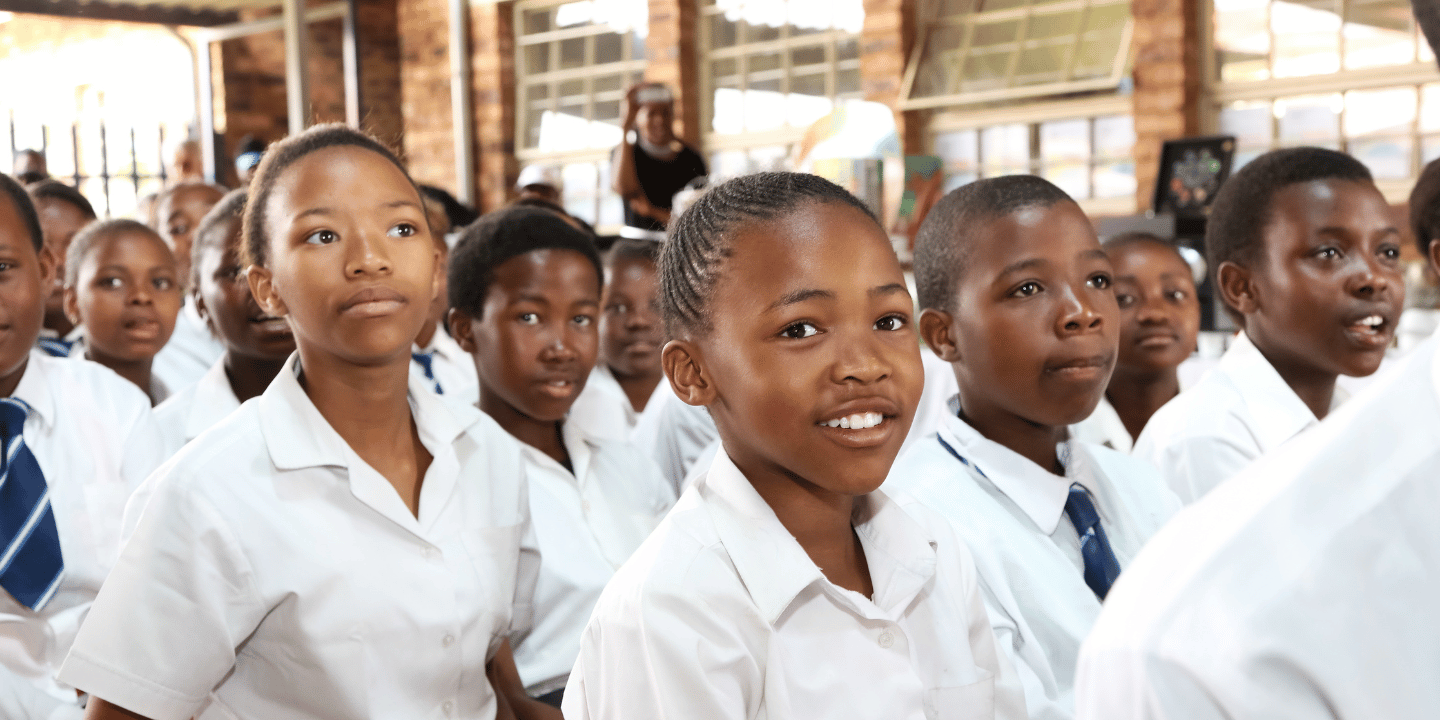
Robust data for improving learning outcomes in South Africa
Research 30 Apr 2026 6 minute readACER is working with partners to strengthen the evidence-base to inform education policy and practice through the second cycle of the South African Systemic Evaluation (SASE).
SASE is a flagship national initiative designed to measure learner achievement in reading literacy and mathematics at Grades 3, 6 and 9. Grounded in South Africa’s local education context, it collects rich information about learners, schools and the broader education system to understand what drives or hinders learning. SASE’s primary purpose is to generate insights into the factors that influence teaching and learning, and to use those insights to inform policy and practice.
The first cycle of SASE was administered in 2022, with findings published in 2024. Those results provided credible, locally developed evidence about learner performance and system-level trends. They also marked a shift away from reliance on external benchmarks from international assessments, positioning SASE as a key policy instrument for strengthening education quality from within the system.
Now, with data collection scheduled for October this year, SASE cycle 2 builds on that foundation. It will deepen the measurement of system-level performance trends in reading literacy and mathematics, establish performance standards to diagnose achievement at different levels of the system, and evaluate the implementation and impact of policies and programs. It will also enable South Africa to report on the proportion of learners meeting global minimum proficiency levels in reading and mathematics under United Nations Sustainable Development Goal 4.
The SASE is led by the National Assessment unit in the Department of Basic Education (DBE), in partnership with assessment units across all 9 South African provinces. Technical support is provided by the consortium led by the Australian Council for Educational Research (ACER) and the Education Quality and Access for Learning (EQUAL) Network.
Dr Mark Chetty, Director National Assessment at DBE said cycle 2 represents a decisive step from measurement to system-wide impact.
‘SASE is more than an assessment. It is a strategic policy instrument that gives us credible national evidence to guide reform. With cycle 2, we are strengthening our ability to track progress, diagnose challenges and ensure that policies and programs deliver meaningful improvements for learners.’
Over the next 4 years, ACER and EQUAL Network will provide technical assistance in assessment design, data analysis, reporting and capacity development. With more than 95 years of experience in large-scale assessment, ACER brings internationally recognised expertise to ensure rigorous quality assurance while building sustainable capacity within the South African system. EQUAL Network contributes more than 30 years of contextual knowledge, strong local networks and experience in curriculum and policy, supporting effective dissemination and practical use of results.
SASE cycle 2 focuses on embedding technical excellence within national systems.
‘ACER’s role in SASE cycle 2 is to support the DBE to design and implement a high-quality assessment that produces robust data and strengthens local capacity. The ultimate goal is to ensure quality evidence routinely informs education decision-making,’ said Dr Ursula Schwantner, Principal Research Fellow in ACER’s Assessment Transformation team.
DBE is spearheading mother tongue-based bilingual education in assessment – a groundbreaking step to help all learners perform at their best. SASE is conducted in all official languages at Grade 3 and aligns with the incremental upscaling of mother-tongue based bilingual education in Grades 6 and 9. This approach supports learners to demonstrate what they know and can do in ways that reflect the realities of classrooms across the country.
By building officials’ confidence in using data, SASE supports decision-making at provincial and district levels and helps identify and address issues affecting teaching and learning.
‘Data only creates impact when it is understood and applied. Through cycle 2, we are working with DBE and provincial teams to ensure that SASE findings translate into targeted interventions, stronger support for schools and measurable improvements in learning,’ said Dr Anil Kanjee, Director EQUAL Network.
By evaluating learners and schools holistically and identifying enabling and constraining factors, SASE cycle 2 moves beyond reporting results to enable education system improvements. In doing so, it reinforces South Africa’s commitment to using robust, locally generated evidence to improve education quality and ensure better outcomes for all learners.